Investing in Bespoke Glass Bottle Moulds
Bespoke Glass Bottle
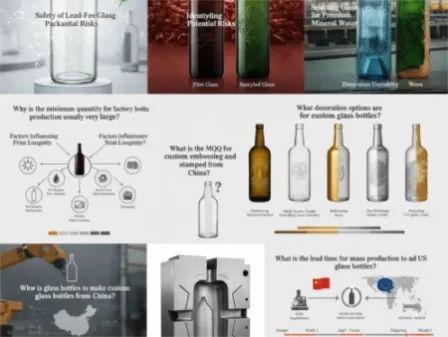
Bespoke Glass Bottle Moulds – Commissioning a custom glass bottle requires a significant upfront investment in “tooling”—the metal moulds that shape molten glass. While prices vary according to technical specifications, a standard production mould set typically costs between $3,000 and $15,000, with highly intricate or industrial-scale designs exceeding $50,000.
Primary Cost Drivers
The total expenditure is dictated by the physical attributes of the bottle and the required production speed.
- Design Complexity: A standard cylindrical bottle is relatively inexpensive to engineer. However, asymmetrical shapes, thick-walled “luxury” bases, or intricate brand embossing increase the complexity of the CNC machining process, thereby raising the price.
- Cavity Count: In mass production, “multi-cavity” moulds allow the factory to produce several bottles simultaneously (e.g., double-drop or triple-drop). While this significantly increases the initial tooling cost, it reduces the per-unit price by maximising furnace efficiency.
- Material and Durability: Moulds are crafted from high-grade alloys or cast iron. Premium materials are essential for high-volume runs, as they must withstand extreme temperatures for millions of cycles without deforming.

The Prototyping Phase
Before committing to full-scale production, most brands invest in a sample mould.
- Cost: These initial prototypes typically cost between $11,00 and $1,500.
- Purpose: The sample mould allows the manufacturer to produce a limited batch (often 5–10 units) for the client to verify dimensions, weight, and clarity before the final production moulds are cast.
Economic Considerations
| Component | Estimated Cost (USD) | Timeline |
|---|---|---|
| Technical CAD Drawing | Free | 3–5 Days |
| Sample Mould | $11,00 – $1,500 | 15–20 Days |
| Production Mould Set | $3,000 – $15,000+ | 4–6 Weeks |
Beyond the mould fee, custom projects necessitate a Minimum Order Quantity (MOQ)—typically between 12,000 and 30,000 units. This volume is required to amortise the furnace setup costs and the high energy consumption associated with glass melting.
Conclusion
While the initial investment in bespoke tooling is substantial, it is a one-time cost that allows a brand to own a unique, trademarked design. For long-term product lines, this investment is quickly offset by the brand differentiation and premium market positioning that custom glass provides.