
Quality Assurance in Chinese Glass Manufacturing
Quality Assurance in
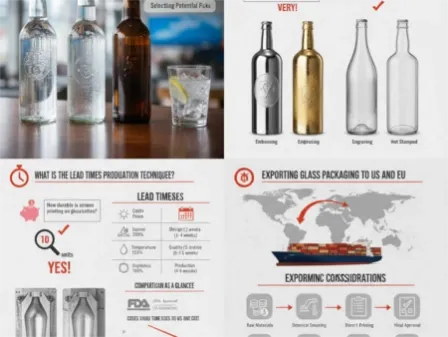
Quality Assurance in Chinese Glass Manufacturing – Leading Chinese glass manufacturers maintain rigorous quality standards through a multi-layered approach, combining material science with advanced automation. This ensures that every vessel meets the stringent safety and structural requirements of the global food, beverage, and cosmetic industries.
1. Raw Material Purity and Melting
The foundation of a high-quality bottle lies in its chemical composition. Manufacturers strictly source high-grade silica sand, soda ash, and limestone.
- Contaminant Removal: Materials are screened for impurities that could cause “stones” or discolouration.
- Thermal Precision: Furnaces heat the mixture to approximately $1,600, where precise temperature control ensures a homogeneous, bubble-free molten glass ready for moulding.
2. Controlled Annealing and Stress Relief
Once formed, glass must be cooled gradually to ensure durability. This process, known as annealing, takes place in a temperature-controlled tunnel called a ‘lehr’.
- Structural Integrity: Controlled cooling releases internal thermal stresses created during the rapid forming stage.
- Polarised Inspection: Technicians use polarised light observation to verify that stress has been successfully relieved; an improperly annealed bottle is brittle and prone to shattering.
3. Automated In-Line Inspection
Modern Chinese facilities utilise high-speed, automated systems to eliminate human error at the “cold end” of the production line.
- Camera Sensors: In-line cameras scan every bottle for cosmetic flaws, such as cracks, “bird-swings”, or trapped air bubbles.
- Dimensional Accuracy: Automated sensors measure wall thickness and neck diameter, ensuring the glass meets tolerances as tight as around 0.2mm to guarantee a perfect seal with closures.
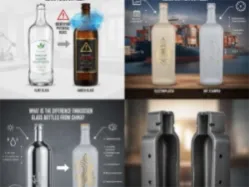
4. Rigorous Physical Testing
To meet international benchmarks such as FDA, ISO, and SGS standards, representative samples from each batch undergo destructive and non-destructive testing:
| Test Type | Procedure | Purpose |
|---|---|---|
| Thermal Shock | Rapid transfer between extreme temperatures | Ensures the glass can withstand pasteurisation. |
| Internal Pressure | Hydrostatic pressurisation | Vital for carbonated beverages and sparkling wines. |
| Impact Resistance | Pendulum strike tests | Simulates rigours during transit and handling. |
Conclusion
By integrating sophisticated sensor technology with traditional annealing expertise, Chinese manufacturers deliver glass packaging that is both aesthetically flawless and technically robust. This comprehensive oversight ensures that brand owners receive consistent, food-safe containers that perform reliably on high-speed bottling lines.