Safety of Lead-Free Glass Packaging
Lead-Free Glass Pack
Lead-Free Glass Packaging – Glass is formed by vitrifying silica sand at extreme temperatures, transforming its ordered crystal structure into a stable, non-porous material. While traditional “lead crystal” incorporates lead oxide to achieve superior brilliance and density, modern lead-free glass has become the industry standard for the safe, long-term storage of alcoholic beverages.
The Risk of Lead Leaching
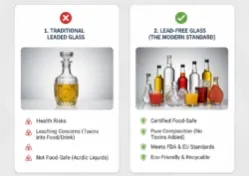
Lead crystal typically contains between 24% and 32% lead oxide. When high-alcohol or acidic liquids—such as port, brandy, or wine—are stored in these containers, lead ions can leach into the liquid.
The health risks are significant when storage is prolonged:
- Leaching Velocity: Research indicates that port stored in a lead crystal decanter can see lead concentrations increase fifty-fold within four months, reaching up to $4,000.
- Long-term Storage: Brandy stored for over five years in crystal can exceed $20,000, vastly surpassing the safe drinking water limit of $50.
- Serving vs. Storage: While using lead crystal for immediate serving at a dinner party is generally considered low-risk, it is unsuitable for any form of extended storage.
Why Lead-Free Glass is the Safe Alternative
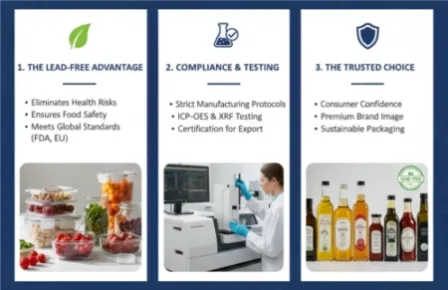
Lead-free glass (including soda-lime and borosilicate variants) is chemically inert and non-toxic. It provides an impermeable barrier that does not react with ethanol or organic acids, ensuring the spirit's flavour profile and safety remain uncompromised.
Key Safety Advantages:
- Chemical Stability: Lead-free glass does not migrate harmful substances into the liquid, even over decades of storage.
- Modern Purity: High-quality “Super Flint” glass achieves the brilliance associated with crystal by using high-purity silica rather than toxic metallic additives.
- Versatility: It is compatible with all spirit types, from clear gins to highly acidic fortified wines.
Comparison of Glass Safety
| Feature | Lead Crystal | Lead-Free Glass |
|---|---|---|
| Material | 24–32% Lead Oxide | Silica, Soda, Lime |
| Primary Use | Ornamental / Short-term serving | Mass production / Long-term storage |
| Toxicity Risk | High (Leaching potential) | None (Inert) |
| Clarity | High brilliance | High (especially Super Flint) |
Conclusion
To ensure consumer safety and regulatory compliance (such as FDA or EU standards), lead-free glass is the only appropriate choice for bottling alcoholic beverages. When sourcing glassware, brands should prioritise “lead-free” certification and remain cautious of vintage or heavily decorated items that may utilise lead-based enamels or pigments.