Buying Guides
Stock Bottles or Custom Bottles: Which Is Better for a Spirits Brand?
Compare existing bottle designs, customized decoration and bespoke moulds for your spirits brand, with checks for closures, total cost, samples and reorders.
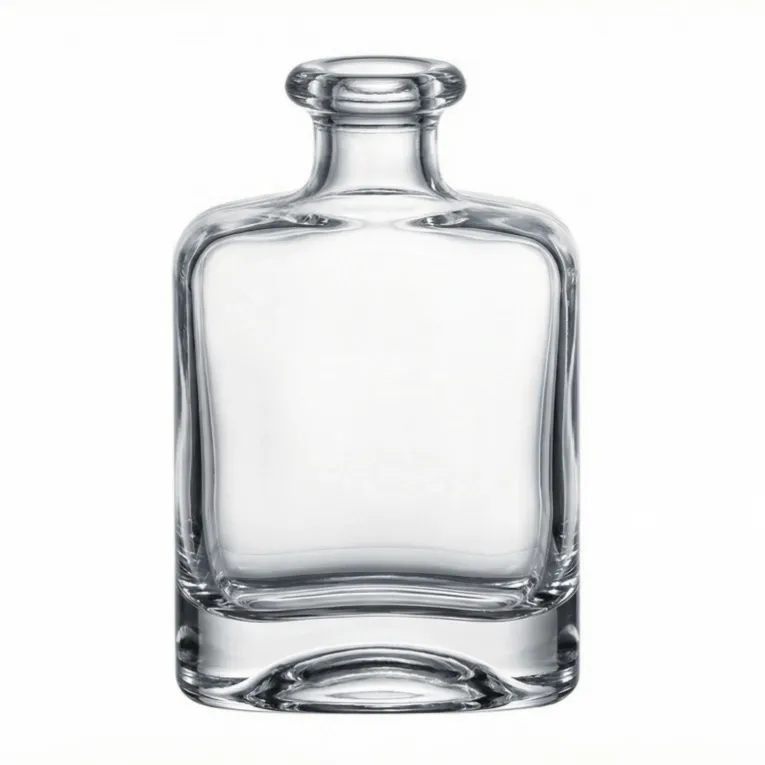
Choose a production route, not just a bottle shape
You have a spirits label ready, a launch date to work towards and two bottle designs on your desk. One uses an existing shape; the other needs a new mould. The custom option looks distinctive, but its development work must fit your budget and schedule. The existing design feels simpler, but will it work with your closure and brand presentation?
There is no single winner in the stock vs custom spirits bottle comparison. An existing design may suit a project that values fewer shape-development steps. Bespoke tooling may suit a brand with a defined design requirement and a credible repeat-order plan. Between them sits another route: an existing bottle design with carefully selected decoration. Compare all three against the same project brief.
First, clarify what “stock bottle” means
A stock design is not necessarily a bottle sitting in a warehouse. It may mean an established shape made with existing tooling, with a new production run still required. Before building a launch schedule around it, confirm the exact model, available quantity, condition, location and replenishment arrangements. Treat finished inventory and an existing-mould production order as different purchasing options.
This distinction matters when components arrive at different times. Bottles might be available while the selected closure, printed labels or gift boxes still need production. Conversely, choosing an existing mould avoids developing a new shape but does not remove decoration, sampling or packing decisions. Your launch depends on the complete approved pack, not the bottle description alone.
Compare three routes for the same spirits project
Existing design with standard presentation
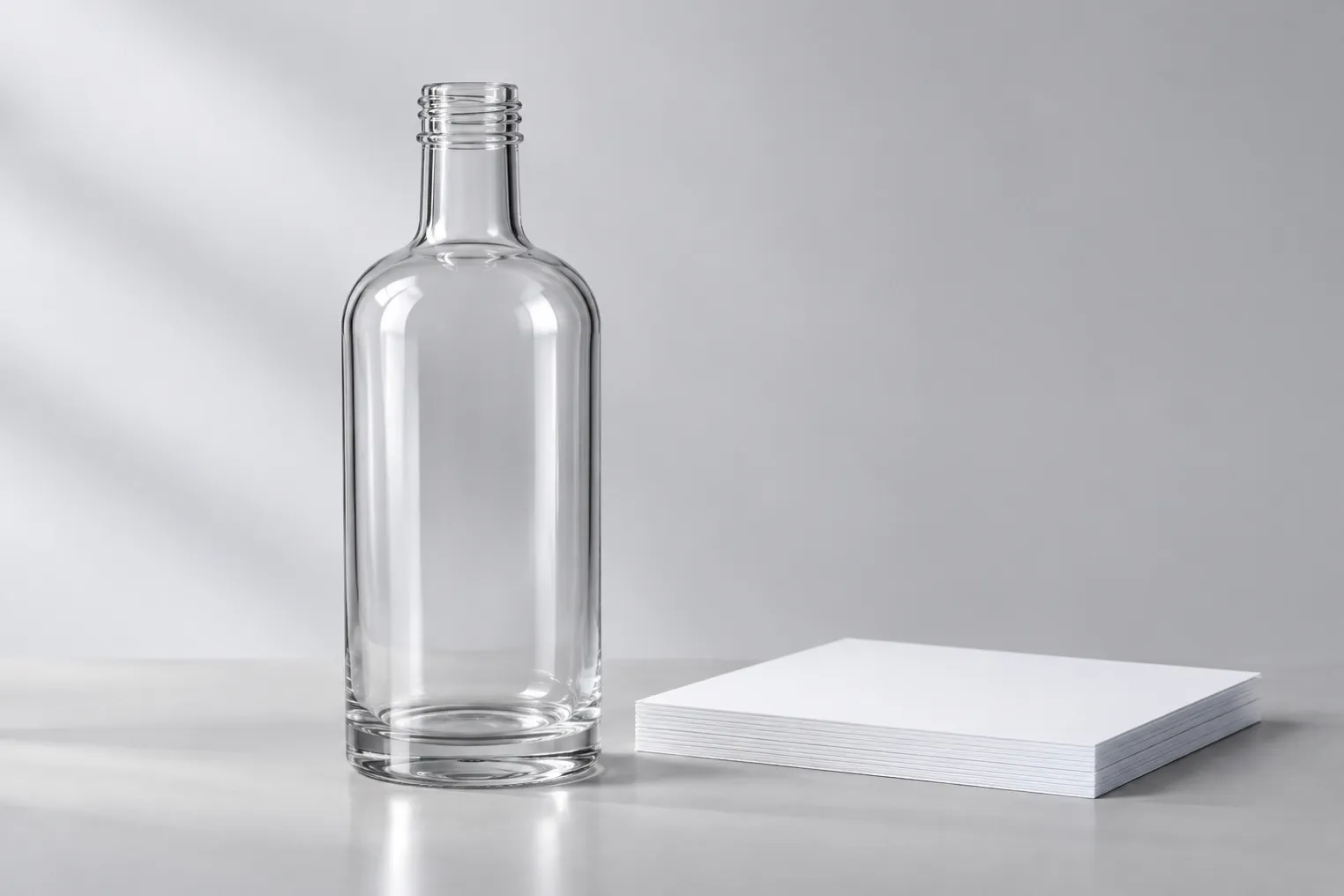
Consider this route when the bottle shape is acceptable and your priority is to resolve practical requirements with fewer design changes. Check capacity, dimensions, label area, closure compatibility and supply conditions. Confirm whether other buyers can use the shape. A familiar silhouette can still support a coherent brand identity, but it does not by itself provide an exclusive bottle design.
Existing design with customized decoration
This middle route separates the glass shape from its appearance. Labels, screen printing, colour spraying, frosting or hot stamping may provide the visual treatment you need, subject to the bottle surface and project requirements. VetroPuro presents these decoration options alongside its glass bottles. Confirm suitable artwork, decoration areas, sample appearance and applicable order conditions rather than assuming every process suits every bottle.
Evaluate the decorated bottle with the closure and, where relevant, the gift box. An opaque coating changes how much liquid is visible; a label needs a suitable panel; a metallic detail must be assessed on the actual surface. The useful question is whether decoration achieves your intended presentation without changing the moulded glass shape.
Bespoke bottle with dedicated tooling
Consider a new mould when the required silhouette, shoulder, base or moulded detail cannot be achieved with an acceptable existing design. Document what the new shape must accomplish before approving tooling. A distinctive design can serve a branding objective, but it does not guarantee higher sales, a premium price or distributor acceptance. Judge the proposal against your design brief and commercial plan.
Make closure and filling compatibility a decision gate
Before comparing appearance, establish the neck finish: the dimensions and geometry at the bottle opening that must match the closure. Review the proposed stopper or cap, sealing arrangement, overall pack height and filling equipment requirements with the relevant suppliers. Similar-looking necks are insufficient evidence of compatibility.
Use a dimensioned bottle drawing and representative samples for the checks your project requires. Confirm nominal and brimful capacity separately, together with agreed dimensional tolerances and inspection criteria. If an attractive bottle requires changes to your closure, filling setup or packing line, include that work in the comparison. Neither an existing mould nor a custom mould removes the need for these checks.
Compare total project cost and tooling terms
Request comparable proposals for the same quantity, decoration, closure, packaging and delivery basis. Break out bottle production, mould development where applicable, sampling, artwork or decoration setup, closures, gift boxes, protective packing and freight. Otherwise, a lower bottle unit price may simply exclude work included in the alternative proposal.
For bespoke tooling, establish in writing what the fee covers, who owns the moulds, who maintains and stores them, whether use is exclusive, and what happens if you change suppliers or stop ordering. Do not assume paying a tooling invoice automatically grants design rights, exclusivity or the right to move the moulds. Ask how repairs, replacement and later design changes are handled.
Apply the same discipline to the existing-design route. Confirm whether a quoted price depends on a particular production batch, decoration quantity or purchase commitment. Ask about minimum order quantities for each component and how surplus closures or boxes will be managed. A smaller first order can leave a different balance of setup cost and unused packaging than a repeat production programme.
Approve samples before relying on the production schedule
Ask which sample represents which decision: shape and dimensions, closure fit, decoration appearance or the assembled pack. A visual mock-up cannot confirm every production characteristic. Define the samples and checks needed for your project, the buyer responsible for approval and the conditions that release the order into production.
For either route, review the bottle with its intended closure and packaging. Check label positioning, print alignment, handling of decorated surfaces and fit within any insert or gift box. Record accepted drawing revisions, artwork and physical reference samples. If a component changes afterwards, revisit the affected checks before continuing.
Build the schedule around these approvals. Separate tooling, sampling, bottle production, decoration, box production, final packing and transport. Confirm where each estimate starts and what depends on buyer approval or supplied components. Compare an existing-design offer and a bespoke offer on the same basis; “production time” alone does not describe the full path to delivery.
Use your reorder plan to make the final choice
An existing design deserves consideration when your launch requirements are still evolving or you want to avoid developing a new glass shape. Existing design plus decoration deserves consideration when the shape works but the brand needs a different appearance. Bespoke tooling deserves consideration when a specific shape is central to the brief and your team can support the development and repeat-order commitments.
Before selecting a route, ask how replenishment will work. Confirm future production access, component availability, minimum quantities, colour and decoration references, and what notice a reorder requires. Avoid assuming that an existing design will remain continuously available or that a dedicated mould guarantees a production slot. Your next order needs a supply plan as well as an approved sample.
Frequently asked questions
Are stock bottles always available for immediate shipment?
No. The term may refer to an existing bottle design rather than finished inventory. Confirm the exact quantity and availability of the bottle, closure, decoration and packaging before relying on a shipment date.
Can an existing bottle look different without a new mould?
Decoration, labelling and closure presentation can change its appearance while retaining the underlying shape. Review physical samples and process suitability. If the brief requires a different silhouette or moulded feature, discuss whether bespoke tooling is necessary.
Does ordering a custom bottle give my brand exclusivity?
Exclusivity, mould ownership and design rights depend on the agreed terms. Specify the scope, duration and responsibilities in writing; a custom shape or tooling payment alone should not be treated as a complete rights agreement.
Prepare one brief for a useful bottle comparison
VetroPuro focuses on spirits and mineral water glass bottles, with support for bottle design coordination, decoration, closure matching and complementary gift boxes. To discuss your spirits project, contact VetroPuro with the intended capacity, reference shape or drawing, closure details, artwork, first-order quantity, reorder expectations, delivery destination and launch requirements. Identify which requirements are fixed and which can change.
Use that brief to confirm the available bottle routes, sample requirements and commercial terms before ordering. The better choice is the one your team can approve, fill, pack and replenish under clearly agreed conditions.